




Health Connection: 7 Powerful Ways to Strengthen Your Community

We’ve been taught to believe that health is something you earn on your own—by morning runs, by gritting your teeth and swallowing bitter green smoothies, by staring at your sleep tracker like it’s an astrologer predicting your fate. We record our steps as medals. We count our calories like we sin. We meditate peacefully, hoping that the app will tell us that we “succeed.” We treat our bodies as personal projects – fixable, measurable, and entirely our own responsibility.
But here’s the sobering truth that no one installs fitness apps for:
You were never meant to heal alone.
The most powerful force for your health is not in your gym bag or Apple Watch.
It’s the neighbor who waves from his porch every morning.
It is in the laughter that erupts from the communal garden when the tomatoes get too big and the children chase the bees.
It’s in the older guy who sits on the bench outside the library, and always has an extra granola bar in his coat pocket “just in case someone turns up hungry”.
It’s in the group of moms who meet every Thursday in the park—not to talk about diets, but to talk about skipping school, sharing snacks, and letting the kids climb the same rusty monkeys when they finally breathe.
Isolation doesn’t just make you lonely.
It makes you sick.
Studies show that it is as dangerous as smoking. It increases blood pressure, weakens the immune system and reduces happiness. But community?
Community is medicine.
This is why you walk more when you know someone is waiting for you at the cafe around the corner.
That’s why you try to do yoga when your friend invites you – and you both laugh when you fall.
This is why you stop scrolling at 10 pm. Because the neighborhood block party is happening, and someone is playing guitar under string lights, and you don’t want to miss it.
Table of Contents
1. Reclaim the Public Table: The Power of Shared Meals
There was a time—maybe in your childhood, maybe in your grandmother’s kitchen—when dinner wasn’t just a meal you ate. It was something you were waiting for. Spoons clink on utensils. The smell of garlic in olive oil is beginning to become pungent. The sounds of the voices overlap – one tells a story, one laughs very loudly, one asks: “Pass the salt?” And the other says, “Wait, that’s my spoon!” You didn’t just fill your stomach. You filled your soul.
Now?
We eat in the car.
We eat while we scroll.
We eat alone on the couch, staring at the screen and wondering why we feel so empty even when our bellies are full.
We have forgotten what food is for.
It’s not just fuel.
This is the connection
It’s like when your neighbor comes over with a pot of lentil stew after your mom passes away – no note, just a Tupperware lid with a little heart ball on it.
This is the teenager who comes to the community garden every Saturday, not because she has to, but because she knows the dirt under her fingernails – and because Mrs Patel always saves her a piece of her homemade naan.
It’s Sunday night in the park, where everyone brings something from home – a spicy curry, a watery Jell-O salad, a loaf of bread whose crust is so hard it could crack a tile – and no one cares if it’s “perfect” or not. All they care about is that you came.
These are not old memories.
This is medicine.
When we gather around a table—real, imperfect, crowded, messy—we do more than eat.
We remember.
2. Cultivate Green Spaces Together: The Health of the Land and the People

Then one spring, Maria, number 42, came with a spade, a packet of sunflower seeds and a thermos of coffee.
He did not ask for permission.He didn’t make any flyers. He has just started digging.
At noon, Mr. Chen was there from across the street, kneeling beside her and pulling out rusty cans with his bare hands.
On Friday, three kids from the block planted lilies in a circle around the corner as dirt flew into their hair.
In June, there was a wooden sign that someone had painted with chalk letters: “Our garden”.
Now? It is alive.
Tomatoes hang heavily on vines that climb a trellis made from old fence posts.
Basil grows wild near the zinnias, buzzing with bees that don’t care about property lines.
A bench made from salvaged wood sits under an old maple that escaped the bulldozers – where people now sit, not to escape, but to live.
It’s not just a garden.
This is a heartbeat
When someone kneels in the soil near his neighbor, he is not just sowing seeds.
They plant faith. They plant patience.
They cultivate the quiet, stubborn belief that if we care about something together, she will care about us too.
You don’t realize how much you’ve been holding your health – until you’re on your knees, toes pressed into the cold, dark earth, and you hear someone say, “There’s grass growing next to your pepper plant,” and you laugh because you didn’t even know what a pepper plant looked like.
3. Move as a Mob: The Synergy of Group Physical Activity
You realize that feeling—the one where you lace up your footwear, stare at the clock, and assume, I must cross for a stroll… But then you definitely remember: no person’s waiting. No one’s counting on you. So you unlace them. You scroll. You inform yourself that you’ll do it the following day.
That’s the loneliness of fitness.
And then—you observe something.
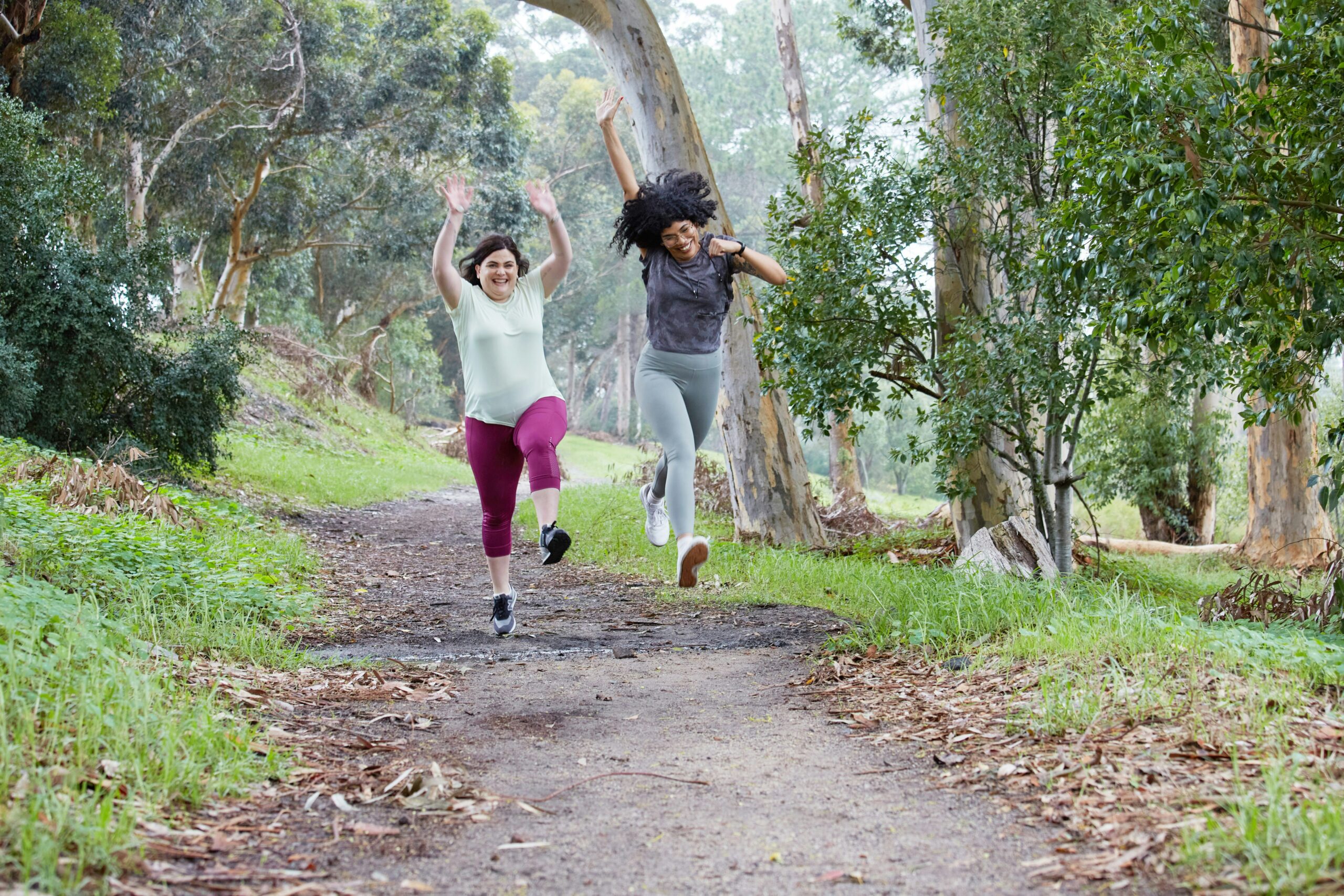
The equal female who constantly walks along with her dog? She’s there too.
The guy who used to nod at you in the grocery store? He was given a limp, but he shows up every day, even if it rains.
The youngster who in no way talks to adults? He’s texting his buddy, “You coming?”—and then he joins us, headphones on, but walking anyway.
We don’t talk a good deal at the start.
Just the rhythm of footsteps on pavement.
The chirp of birds.
The sound of a dog panting luckily beside us.
But then, a person says, “Did you notice the dawn the day gone by? It looked like melted peach.”
And all at once, we’re all looking up.
And then—someone else laughs and says, “I tripped over my very own toes last week seeking to hold up with my little one. You ever do that?”
And the complete organization bursts out guffawing.
It’s now not an exercise.
It’s a ritual.
Every morning,at the same time.The same direction.
The identical faces.
And over weeks, months, years—those faces end up buddies. You study that Mr. Rivera walks because it’s the best time he looks like himself since his spouse passed away.
You discover that Priya, who constantly brings homemade oatmeal cookies, is learning English and training via naming everything we bypass: “Tree.
4. Foster a Culture of Skill-Sharing: The Wisdom of the Crowd
You know that neighbor – the one who always waves but never speaks? The guy who lubes and fixes bikes on his front porch on Sundays and hums old rock tunes? You’ve seen them. You’ve wondered what they’re like. But you never asked.
Until one Tuesday, your child’s bike chain broke again, and you stood there holding the broken link, feeling like a failure as a parent, and wondering how much the repair shop would charge. You wouldn’t spend the money. You didn’t want to wait. You didn’t know what to do.
He didn’t even drink a cup of coffee.
He’d just sit with you on his front porch, tell you how to fix it—slowly, patiently—and when it was done, he’d say, “Next time you fix mine.”
And you did it.
Two weeks later, his lawnmower broke down. You, who had never touched a gas engine in your life, Googled “how to clean a carburetor” while he watched. You tripped. You cursed. You’ve almost given up.
But you didn’t do this. And when it came back to life, you both laughed like children who had just discovered fire. This is how it starts.
Not with any program. Not through grants. Not with any fancy app. Just with a broken chain…and a question. Because here’s the quiet truth your society isn’t telling you:
You don’t need to hire someone to fix your life. You just have to ask.
Your neighbor who lost his job last year? She knows how to tie socks just like her grandmother taught her – so now, every Thursday, she hosts “Loose and Mingle” at the community center. People come with torn sweaters, torn jeans, and broken buttons. Tea
5. Create Welcoming Third Places: The Living Rooms of the Community
It’s a corner cafe on the edge of town—with a planked blue door, mismatched chairs, and a blackboard that always has something ridiculous written on it like “Today’s Special: Coffee + Kindness (prize: your favorite story)”—that doesn’t look like much from the outside. But if you’ve ever sat there in the rain on a Tuesday afternoon sipping a lukewarm latte while an older man reads poetry aloud to a group of teenagers who don’t even roll once, you know: This place is sacred.
This is Ray Oldenburg’s “third place”.
Not the place where you sleep.
Not where you work.
But the place you belong.
This is where the barista knows your name—not because she’s trained, but because she remembers how you take your tea (two sugars, a splash of oat milk, no stirring), and because she noticed you’ve been sober for the past three weeks. So last Thursday, she gave him a cake without saying a word. Tucked under it was just a small note: “You are not alone.”
It’s not marketing.
It’s medicine.
Third places aren’t about decorations or Wi-Fi passwords. They are about the quiet, unscripted moments that connect us. The boy who comes after school to do homework and play chess with the retired mechanic who fixes bikes for free. The single mother who joins the book club because she needs adults to talk to who won’t ask about her paycheck.
The teenager who shows up to open the mic night trembles and sings the song he wrote about losing his father – and the whole room falls silent, then bursts into applause, not because he was perfect, but because he was brave enough to be real.
These places don’t ask you to perform.
They don’t require you to be productive.
They don’t care if you’re rich, employed, or “on track.”
And when you do.
6. Champion Local Health Advocacy: Speaking with One Voice
It started with a child’s cough.
Not cold – something deeper. Something that won’t go away. The way Maria lay awake at night listening to the six-year-old hiss in the dark and wondering if it was asthma or if it was something else. something in the air.
she didn’t know
But she knew enough to ask.
That’s why Maria didn’t call the doctor just like that.
He called a meeting. Not in a fancy conference room.
Not with PowerPoint. In the community center’s parking lot on Saturday morning, there were folding chairs, a thermos of coffee, and a sign that read: “Our babies are breathing. Are you?” Twenty people came.
So forty.
Then Ms.He was not a worker. He was no lobbyist. They were mothers who had two jobs.
The dad who fixed cars on weekends.
Grandparents remember when the creek used to run clear.
High school kids who had never spoken at a town hall before.
They brought pictures of their children with oxygen masks.
They brought air quality reports from the EPA that showed health pollution increased every time the factory, located on the outskirts of town, ran a night shift.
They came up with a map of every playground, school,l and senior center within a mile of the smokestacks.
And then he did something revolutionary.
He didn’t just complain. He organized. They formed a group: Neighbors for Clean Air. He did not wait for permission.
He appeared at city council meetings – not in a suit, but in a hoodie and work boots, with pictures of his children: “I want to play outside
7. Practice Radical Neighborliness: The Art of Small, Kind Acts
This is the new family who moves into the house on Elm Street—quiet, insecure, boxers, and a baby health who won’t stop crying—and on their first night, they’re greeted with a basket of homemade salsa, a set of house keys they didn’t ask for (“just in case you locked yourself out”), and a note: “Welcome. We’re glad you’re here.”
This is radical neighborliness – not the kind that requires a title, budget, or mission statement. It’s the kind that lives in the spaces between bigger things. It is saying “good morning” to the postman by name, and remembering that his dog is limping.
It is leaving a jar of honey on the porch of a family whose baby was born last week, without any signature, with only a handwritten note: “To make up for the sleepless nights.”
It turns out that Mr. Henderson hates the new street lights because they remind him of the hospital where his wife went, so you quietly ask the city to dim them a bit near his window. It’s worth noting that the girl who sits alone at the bus stop every afternoon hasn’t smiled in weeks – and instead of looking away, you sit next to her and say: “My dog health does this too – when he’s sad, he just looks at the clouds. Want to see it sometime?”
8. Weaving the Tapestry of Health Well-being
The path to true health is never climbing a mountain alone with a checklist in hand – it’s a slow, winding walk through a village, where you stop to talk to the baker who knows your child’s favorite cake, where you stop to help an elderly neighbor carry her groceries because the pavement is icy, where you sit on a bench and realize why you’re smiling without knowing why.
It’s not about working harder, tracking more, or buying the right supplements. It’s about showing up – not as a perfect version of yourself, but as the messy, tired, hopeful human you are – and finding it to show up for other people in their imperfect ways as well.
This is how health becomes real. Not in a gym with mirrored walls, but in a community garden where soil is shared, the harvest is celebrated, and children learn that food does not come from plastic bags, but from dirt, patienc,e and people who show up even when they are tired.
Q: How does strengthening community ties actually improve personal health?
A: Strong community connections reduce loneliness, lower stress hormones, and increase feelings of belonging—all of which are linked to better mental health, stronger immunity, and even longer life expectancy. When we feel seen and supported, our bodies respond with less inflammation and more resilience.
Q: Do I need to be an organizer or leader to help strengthen my community?
A: Not at all. Small, consistent actions matter most—sharing a meal, checking in on a neighbor, volunteering an hour, or simply smiling and saying hello. You don’t need a title; you just need to show up.
Q: Can community health efforts make a difference in underserved areas?
A: Absolutely. Grassroots efforts—like community gardens, walking groups, or local health education circles—often fill gaps that larger systems miss. When people come together to meet their own needs, they build not just health, but power, dignity, and lasting change.