







Health Breakthrough: 5 Proven Medical Innovations That Deliver Real Results
We live in an international world packed with information approximately the following massive elements. A new cellphone, a brand new app, a new fashion in social media. This may be overwhelming. But what approximately the successes that surely be counted? The ones that exchange no longer simply the manner we live, but also how we live? Something that directly affects our most precious and useful resource: our fitness.
For many of us, the world of medicine can seem complicated and distant. We listen to approximately complex research and future technology, but we wonder, “What does this suggest for me? For my aching joints? For my family history of heart ailments? For my peace of mind?” This article is exclusive. This isn’t always approximately distant possibilities. Here’s a study 5 actual, verified scientific improvements that are delivering tangible, existence-converting consequences for human beings right now. They represent a powerful shift in the direction of a greater non-public, unique, and gentle approach to our health.
These are achievements that assist human beings in walking without pain, seeing cancer no longer as a death sentence, but as a potential condition, and regaining their intellectual well-being. They are the result of many years of research, limitless hours of committed scientists and doctors, and a simple, effective goal: to improve human health in methods we once simplest dreamed of. Let’s discover these five pillars of modern-day scientific advancement that placed the power of fitness back within the arms of sufferers and their doctors.
Table of Contents
1. mRNA Vaccines: More Than Just a Shot for COVID-19
As the COVID-19 pandemic swept the world, a new word entered our daily vocabulary: mRNA. For most, it was synonymous with the Pfizer and Moderna vaccines. But the true story of mRNA technology is much bigger, and its impact on our future health is enormous. This innovation is a 100 percent game-changer.
What’s with simple words?
Think of your body’s cells as a sophisticated factory. The DNA at its core is the blueprint, containing all the instructions you need to make it. mRNA, or messenger RNA, is like a photocopied page from that blueprint. It gives a specific instruction to the factory floor (the part of the cell that makes things) to make a specific protein.
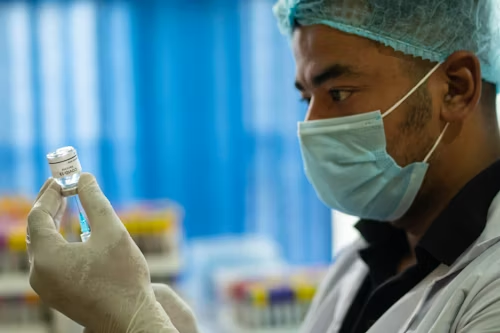
Traditional vaccines often work by putting weakened or inactivated bacteria into your body. Your immune system learns to recognize it and builds a defense. mRNA vaccines take a completely different approach. Instead of giving you a piece of the virus, they give your cells a temporary instruction book – mRNA – to make just a harmless part of the virus, called the “spike protein”. Then your body makes this protein itself, your immune system recognizes it as foreign, and creates a powerful army to fight it. The mRNA instructions are then immediately destroyed by your body. They don’t change your DNA; They are a temporary message that completes its work and then disappears.
The Real-World Result:
The result throughout the pandemic turned into the fastest and handiest vaccine rollout in records, saving tens of millions of lives. But the actual fitness leap forward is what comes subsequent. Scientists are actually using this same mRNA technology to teach our our bodies to combat other enemies.
Personalized Cancer Vaccines: This is possibly the most interesting software. Doctors can take a pattern of an affected person’s tumor, series its precise genetic mutations, and which design a custom mRNA vaccine that teaches the affected person’s immune system to especially search out and destroy cancer cells bearing that precise signature. It’s a hundred percent personalised remedy, turning the frame’s personal defenses right into a precision weapon against most cancers. Early trials for melanoma, pancreatic cancer, and other types have shown lovely promise.
Fighting HIV and Flu: Researchers are developing mRNA vaccines for HIV that might educate the body to provide broad-spectrum antibodies, something that has eluded scientists for decades. For the flu, mRNA technology ought to allow for quicker manufacturing of extra effective, seasonal vaccines that concentrate on multiple strains right now.
Rare Diseases: For situations due to a missing or faulty protein, mRNA will be used to train the frame to produce the desired protein, correctly treating the sickness at its source.
This innovation is a profound shift. It moves us from a one-size-fits-all method to a tailor-made method for strengthening our health. It’s about giving our bodies the intelligence to defend themselves with super precision, marking a brand new era for preventative fitness and remedy.
2. The AI Doctor Will See You Now: How Artificial Intelligence is Supercharging Medicine
The term “artificial intelligence” may bring to mind sci-fi robots, but in the world of healthcare, AI is less about replacement and more about empowerment. It is a tool that makes doctors smarter, makes diagnoses faster, and makes treatment smarter. It is becoming a silent partner in protecting our collective health.
What’s with simple words?
AI in medicine is essentially a computer system that is trained to recognize patterns in large amounts of data. Imagine showing a child thousands of pictures of cats and dogs until they can immediately tell the difference. Now, increase it. Researchers “feed” millions of medical images—X-rays, retinal scans, skin lesions—to the AI system with accurate diagnoses. AI learns subtle, often invisible to the human eye, patterns that indicate disease. It doesn’t get tired, it doesn’t have a bad day, and it can process more information than any single human.
Real-world results:
AI is not about a cold, a robot doctor giving you a diagnosis. It’s about a radiologist who uses an AI tool to highlight a possible tumor on a mammogram that they may have missed because they were looking at the scans for 10 hours straight. It is about democratizing competence.
Earlier and more accurate diagnosis: AI algorithms are now better at detecting certain cancers, such as breast cancer, in mammograms than the average radiologist. They can detect signs of diabetic retinopathy (a cause of blindness) in eye scans and detect early signs of stroke in CT scans. This speed and accuracy save lives and prevent long-term disability, which has a direct and positive impact on a person’s health.
3. The Gentle Knife: Precision Radiation That Targets Tumors and Spares Healthy Tissue
For many years, radiation therapy for cancer has been a brutal but necessary weapon. It’s like using a bomb to ruin a goal—it really works; however, there is a lot of collateral harm. Healthy tissue receives stuck inside the crossfire, main to extreme side outcomes that can devastate a patient’s excellent of life and standard health. But a brand new era of radiation technology has changed the sport.
What is it, in easy phrases?
Imagine an incredibly skilled health practitioner who can perform without making a unnecessary reduce. Now, consider that medical professionals can shape radiation beams with pinpoint accuracy to shape the precise, 3-D form of a tumor, although it is wrapped around a delicate organ, just like the spine. This is the promise of advanced precision radiotherapy, with machines like the CyberKnife and Gamma Knife being leading examples.
These systems use real-time imaging and robot fingers to track a tumor’s movement—even the mild movement as a result of respiration—and continuously alter the radiation beams to stay locked on the right track. It’s a “scalpel” product of energy rather than steel.
The Real-World Result:
The benefit to an affected person’s health and well-being is immeasurable.
Treating Inoperable Tumors: For tumors within the mind, spine, or pancreas that are too unstable to remove with conventional surgical procedure, this era offers a non-invasive opportunity. Patients will have a deadly dose of radiation added to the cancer with minimal publicity to the encircling healthy brain or nerve tissue.
Dramatically Reduced Side Effects: Because the radiation is so targeted, patients revel in a ways fewer side effects like nausea, fatigue, and tissue harm. This way they can frequently preserve their day-to-day workouts, work, and maintain their high quality of life during treatment. For someone preventing cancer, preserving their experience of not.
4. The Mind-Body Connection: TMS Therapy for Resistant Depression
For a long time, mental health has been considered separate from physical health. We now know that this is a false division. The brain is an organ, and like the heart or the liver, it can get sick. Depression is a physical disease of the brain that affects its chemistry and circuitry. Yet, for the millions of people who suffer from treatment-resistant depression, medication and therapy are not enough. Transcranial Magnetic Stimulation (TMS) offers a revolutionary, non-invasive physical treatment for this mental health crisis.
What do you understand by simple words?
TMS is a treatment that uses focused magnetic pulses to stimulate nerve cells in an area of the brain thought to be underactive in depression. Think of it as a gentle, magnetic boost to a part of the brain that has become stagnant.
The patient sits fully awake in a comfortable chair. A small magnetic coil is placed on their skull. The machine produces vibrations that feel like light tapping. There is no anesthesia, no surgery, and no recovery time. The increase lasts for approximately. 20 minutes, and everything has happened more than once before we want to connect and do it again.
Real-world results:
For people who have experienced little relief after taking medication for years, even decades, TMS can feel like a miracle. It gives way to hope and a return to life.
Proven effectiveness: Several studies have shown that a significant percentage of patients with treatment-resistant depression experience significant improvement in symptoms after a course of TMS (usually 30-40 sessions over 6 weeks). Many people achieve complete remission.
5. The Digital Health Revolution: Your Smartphone as a Medical Device
Perhaps the most accessible health breakthrough is one that’s in your pocket or on your wrist. The rise of digital health technology – wearables, apps, and telehealth – is fundamentally changing our relationship with our own well-being. It shifts the focus from treating illness to maintaining and promoting lifelong health.
What’s with simple words?
It is the use of everyday technology to collect, monitor, and analyze health data. Apple Watch can perform an EKG. A continuous glucose monitor can send blood sugar readings directly to a diabetic’s phone. A smartphone app can connect you to a doctor via video call in minutes. This is not futuristic; This is happening right now.
Real-world results:
This revolution is about empowerment, convenience, and prevention.
Proactive, not reactive, health monitoring: Wearable devices can detect atrial fibrillation (irregular heart rhythm) before a person has a stroke, alert them to a dangerously high or low heart rate, and track sleep patterns that affect overall health. This moves us from the “wait until we have a heart attack” model to “let’s spot the warning signs and prevent heart attacks altogether.”
Telehealth: The doctor is always “with” The COVID-19 pandemic accelerated the adoption of telehealth, and for good reason. It provides access to care for people in rural areas, people with mobility problems, and anyone who needs a quick consultation without having to travel and waiting in rooms. This ease of access encourages people to seek help early, which is important for maintaining good health.
Conclusion: A Healthier, More Hopeful Future
These five innovations—mRNA vaccines, AI diagnostics, precision radiation, TMS therapy, and digital health tools—are not just isolated advances. Together, they paint a picture of a new medical paradigm. This is a future where medicine is:
Accurate: Treatments are tailored to your unique biology.
Prevention: The aim is to stop the disease before it starts.
Personalized: Your care is about you, not the average patient.
Empowered: You have the tools and knowledge to become an active participant in your health.
The common thread in all these successes is a deep respect for the human body and the human experience. Their purpose is not only to extend life, but to improve the quality. They give hope where there was despair before and gentle solutions where there were only difficult solutions. This is the true meaning of success in healthcare: work that produces real, meaningful results for real people. And it is a future worth striving for.
1. What makes these medical innovations “proven”?
Each innovation has undergone rigorous clinical trials, received regulatory approval (such as FDA clearance), and demonstrated measurable improvements in patient outcomes—ranging from faster recovery to enhanced quality of life.
2. Are these treatments accessible to the average patient?
Many of these breakthroughs are increasingly covered by insurance or available through specialized clinics. As adoption grows, costs are declining, making them more accessible than ever—especially for conditions like diabetes, heart disease, and vision loss.
3. How soon can patients expect to see results?
Results vary by treatment and individual health, but many patients report noticeable improvements within days to weeks. For example, continuous glucose monitors offer real-time feedback, while gene therapies may deliver long-term benefits after a single infusion.