







Health Freedom: 5 Incredible Benefits of Modern Medical Technology Revealed
Imagine a future where your watch gently vibrates to alert you to a heartbeat that no doctor has yet seen – or where a surgeon around the world can operate on you with robotic precision, guided by real-time imaging faster than the human eye. That future is not coming. It’s already here. We are living through a quiet revolution in medicine, where technology not only supports health – it redefines what is possible. For the first time, we go from waiting to get sick to staying healthy, from guessing to knowing, from fear to freedom of action. This is not just progress. This is liberation.
Health new age of medical technology gives us something deeper than longevity—it gives us health freedom. Freedom to understand your body before symptoms occur. Freedom to treat disease with precision that spares us unnecessary pain. Freedom to manage chronic conditions without losing quality of life. We are no longer passive recipients of care; We are informed partners, armed with data, diagnostics and tools that give us real-time information. A glucose monitor that shows how food affects energy. An EKG app that catches arrhythmias early. AI that detects tumors in scans long before they cause damage. This is not science fiction – they are already life-changing devices.
And it’s not just about theatrical successes. This is the everyday grace these innovations bring: a diabetic who sleeps peacefully knowing that his child’s blood sugar is monitored remotely; An elderly person living independently with fall detection sensors; The treatment a cancer patient receives is so targeted that it feels like treatment, not harm. Technology is no longer cold or clinical – it is becoming deeply human, designed not to replace touch, but to extend care beyond the clinic and into our homes.
Table of Contents
Benefit 1: Early and Pinpoint-Accurate Diagnosis
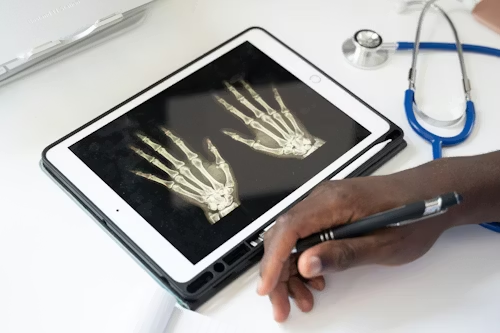
For most of human history, disease appeared only when it was already severe enough to cause damage – by the time you did see a doctor, the damage was often deep and difficult to repair. But today, medicine does not wait for the symptoms to start screaming. Thanks to amazing advances in diagnostic technology, we can now see the invisible, measure the microscopic and act before disaster strikes. Early detection—the silent guardian of a long, vibrant life—is no longer a hope. It is a reality, powered by devices that see into our bodies with almost magical clarity.
Consider an MRI or CT scan: no more rough shadows on film, but luminous, three-dimensional maps of your inner world. A tumor the size of a grain of rice, a hairline in the arteries of your heart, whispers of change in your brain—all of these can be seen, measured, and addressed before they derail your life. It’s not just better image processing. This is the second chance. Cancer caught in stage 1 is not a death sentence – it is often a manageable condition with a full return to life. It’s not just medicine. This is kindness, made possible by machines.
Benefit 2: Minimally Invasive Surgery
Not long ago, the word “surgery” meant several days in a hospital bed, several weeks in recovery and a long, jagged scar as a permanent reminder of the ordeal. But today, thanks to countless processes, that image has been rewritten. Thanks to minimally invasive techniques, surgery has become quiet, gentle and remarkably kind to the body. Rather than being a dramatic disruption, it’s often a brief pause in your life—a precise, gentle intervention that gets you back to your loved ones, your work, your rhythm, much sooner than you might think.
With special equipment, they can remove the gallbladder, repair a hernia or treat other conditions without the trauma of a large open cut. outcome? Much less pain, fewer complications, and healing that feels less like a struggle and more like a reset. Many go home the same day, instead of lying in a hospital bed and sipping tea on the sofa until the evening. Scars turn into blurred lines – evidence not of suffering, but of treatment carried out with care.
Then there is robot-assisted surgery, where human skill meets machine precision. At the console of a da Vinci-like system, a surgeon controls robotic arms that move with a stability that no human hand can match. This results in micro-precise movements inside the body – preserving delicate nerves, protecting healthy tissue and reducing blood loss. In prostate or heart valve surgery, this precision is not only impressive, but life-changing. That means preserving urinary control, sexual function, or heart health in ways that weren’t possible decades ago. It is not about the technology being attractive in itself
Benefit 3: Personalized Medicine and Targeted Therapies
For years, medicine often treated disease like a factory assembly line: same diagnosis, same drug, same dosage for everyone. But bodies are not the same and the diseases are not the same either. What helped one person may make another sick with side effects, or may not work at all. Today, the old model is giving way to something much more humane: personalized medicine. Instead of guessing, doctors can now tailor treatments to your unique biology — your genes, the structure of your tumor, even how your body metabolizes a pill. It’s not just smarter science. This is deep care.
Nowhere is this more transformative than in cancer treatment. Where chemotherapy once attacked all rapidly growing cells – causing hair loss, fatigue and immune suppression – targeted therapy now goes straight to the source. By analyzing a tumor’s DNA, doctors can identify the exact genetic “switches” that drive growth. They then prescribe a precise drug that turns off the switch. For someone with a specific lung cancer mutation, this could mean a daily pill that controls the disease with minimal side effects – turning what was once a terminal diagnosis into a manageable condition. It’s not going to fix everything, but for many people, it’s the difference between surviving and truly living.
Even everyday medications are becoming more customized. Have you ever wondered why a certain antidepressant works wonders for your friend but makes you sick or nauseous? Pharmacogenomics – the study of how your genes influence your response to drugs – provides the answer. A simple cheek swab can now reveal which medications your body will process well, which dosage is right for you, and which medications may cause harm. This means fewer rounds of trial and error, less emotional exhaustion and faster relief for conditions such as chronic pain, anxiety or high blood pressure.
Benefit 4: Wearables and Remote Monitoring
Perhaps the most democratic of all modern medical technologies are wearable devices and remote monitoring devices. They have gradually torn down the walls of the clinic, bringing healthcare into the quiet rhythms of our everyday lives – in the kitchen, living room and even our beds. Health monitoring is no longer only reserved for sterile examination rooms or acute crises, but has become something intimate, continuous and deeply personal. These tools invite us to become active, compassionate managers of our own well-being, providing a gentle but constant reminder that self-care can be done anywhere, anytime.
Get a smartwatch – it’s no longer just a cute accessory or a simple pedometer. Today’s models, such as the Apple Watch, Fitbit or Garmin, act as alert health companions wrapped around the wrist. They listen to your heartbeat, monitor your breathing and even monitor your sleep. Some people can run an EKG on the spot, which can detect irregular rhythms like atrial fibrillation before they turn into something serious. Others measure oxygen in the blood, detect dangerous drops and can automatically call for help. It’s like having a calm guardian with you around the clock, turning ordinary moments into opportunities for awareness and care.
Benefit 5: Advanced Prosthetics and Implants: Restoring Function and Hope
When injury or disease takes away a limb or shuts down the function of an organ, the loss is often more than physical—it can shake a person’s sense of identity, independence, and connection to the world. But modern medicine has evolved with deep compassion at its core, aiming not just to heal but to restore. Through remarkable advances in prosthetics and implants, technology no longer merely repairs the body – it is a reawakening opportunity, helping people reclaim life with a new sense of dignity, purpose and wholeness.
Take bionic limbs: Once only imagined in science fiction, they are now a daily reality for many people. Gone are the days of bulky, immobile dentures. Today’s versions are lightweight, responsive and surprisingly intuitive. By reading the body’s own electrical signals, a bionic arm can translate a thought – “I want to hold the baby’s hand” – into a gentle, precise movement. The ability to hold a cup of coffee, say hello or cradle something as delicate as an egg is not just about function; It’s about rebuilding self-confidence, autonomy and quiet joy in ordinary moments that many of us take for granted.
Then there is the cochlear implant – a silent revolution for those navigating a world without sound. For someone born deaf, it can open up spoken language, laughter and lullabies. For someone who has lost hearing over time, this can mean hearing their grandchild’s voice for the first time or rediscovering the melody of a favorite song.
Embracing Your Health Freedom
The journey of modern medicine is, at its core, a deeply human story – one woven of ingenuity, empathy and an unwavering desire to alleviate suffering. Today’s breakthroughs – such as peering into the body with crystal-clear imaging or repairing tissue with microscopic precision – are far more than scientific achievements. They give us back something deeply personal: the power to choose, understand and shape our health with clarity and confidence.
It’s not about using technology as a crutch, but adopting it as a reliable ally. It helps us move beyond simply reacting to illness to a life based on wellness. With real-time insight into our bodies, we can recognize risks before they become crises, make informed decisions about prevention, and heal in ways that respect both our physical and emotional well-being—with less pain, fewer complications, and greater peace of mind.
What emerges is a new vision of health: one that fits you, anticipates your needs and invites you to participate in your care. This is health that listens, embraces and strengthens – no longer dictated by a distant clinic, but co-created in your everyday life. Whether you’re dealing with a long-term condition or trying to stay healthy, you’re no longer just a patient. you are a partner
And that partnership unlocks something game-changing: health freedom. The freedom to live fully, plan boldly and age with dignity – not with fear of what might go wrong, but with confidence in what is possible. This is the promise of tomorrow’s medicine, and it is already unfolding today, one heartbeat at a time, one data point, one empowering choice.
The journey of modern medicine is, at its core, a deeply human story – one woven of ingenuity, empathy and an unwavering desire to alleviate suffering. Today’s breakthroughs – such as peering into the body with crystal-clear imaging or repairing tissue with microscopic precision – are far more than scientific achievements. They give us back something deeply personal: the power to choose, understand and shape our health with clarity and confidence.
What emerges is a new vision of health: one that fits you, anticipates your needs and invites you to participate in your care. This is health that listens, embraces and strengthens – no longer dictated by a distant clinic, but co-created in your everyday life. Whether you’re dealing with a long-term condition or trying to stay healthy, you’re no longer just a patient. you are a partner
And that partnership unlocks something game-changing: health freedom. The freedom to live fully, plan boldly and age with dignity – not with fear of what might go wrong, but with confidence in what is possible. This is the promise of tomorrow’s medicine, and it is already unfolding today, one heartbeat at a time, one data point, one empowering choice.
1. How does modern medical technology improve patient outcomes?
Advanced diagnostics, minimally invasive procedures, and AI-driven insights allow for earlier detection, personalized treatments, and faster recoveries—leading to significantly better health outcomes and reduced hospital stays.
2. Can medical technology help me take more control of my health?
Absolutely. Wearables, telehealth platforms, and at-home testing kits empower you to monitor vital signs, manage chronic conditions, and collaborate with providers in real time—putting you at the center of your care journey.
3. Is cutting-edge medical tech only available in hospitals?
Not anymore. Many innovations—like remote monitoring devices, smart inhalers, and digital therapeutics—are designed for everyday use at home, making proactive, preventive care more accessible than ever.