






Health Upgrade: 8 Game-Changing Devices Every Wellness Warrior Needs
In today’s fast-paced world, “taking care of your health” can seem overwhelming, like one more thing on a never-ending to-do list. Between fad diets, conflicting headlines and the pressure to be “optimized” around the clock, it’s easy to forget that health doesn’t mean perfection. It’s all about presence, but what if you didn’t have to rely solely on guesswork or willpower? What if you had a gentle, consistent ally—something that doesn’t criticize, but rather helps you see what’s really going on inside your body? This is where smart technology steps in – not as a replacement for intuition, but as a bridge between intention and action.
These tools are not about turning you into a computer-obsessed robot. They are about giving you clarity in a world full of noise. Sleep Tracker doesn’t just count your hours – it shows you how your nighttime sleep affects your rest. A fitness band doesn’t shame you for sitting still – it celebrates your steps and reminds you to move when you’ve been sitting too long. The glucose monitor helps you understand how the afternoon dip relates to your lunch. These tools translate the body’s invisible rhythms into simple, actionable insights. They turn vague goals like “I want to feel better” into clear next steps: Move a little further. Relax a little deeper. Eat with more awareness.
Think of these gadgets as your silent health partners – always there, never demanding, just offering help when needed. They don’t take the place of your doctor, your intuition, or your morning walk. But they help you show all these things perfectly.
Table of Contents
1. The Smart Scale: Beyond the Number
For years, the bathroom scale has played a cruel trick on us – assessing our worth with a single number that tells us next to nothing about our actual health. Two people can weigh the same, but one is strong and energetic while the other is tired and swollen. Numbers alone do not tell the story. But the modern smart scale changes all that. It’s not just a question of how much you weigh? It makes one wonder, what are you made of? And that shift lies in a kinder, wiser way of understanding your body—not as a problem to fix, but as a living system to support.
It’s not magic—it’s science wrapped in empathy. Using a gentle, imperceptible current (you won’t feel anything), the smart scale measures how your body reacts and provides a rich picture: how much muscle you have, how much fat you have, even how much water you retain. It can predict visceral fat – the hidden fat around your organs that quietly affects your long-term health. And yes, it also tracks weight, but now that’s just one piece of a much bigger puzzle. Suddenly you’re not chasing a number. You create balance.
Real power is revealed with time. You may not have lost weight in two weeks – but your muscles are growing, your body fat is decreasing and your hydration is improving. It is not a plateau. There is change. Without this insight, you may have quit your job in frustration. But with this, you are motivated to move forward because you see your progress. The app becomes a journal of quiet victories: not “I lost two kilos”, but “I’m building the strong, flexible body I’ve always wanted”. It is not arrogance. It is life force.
2. The Fitness Tracker: Your 24/7 Health Companion
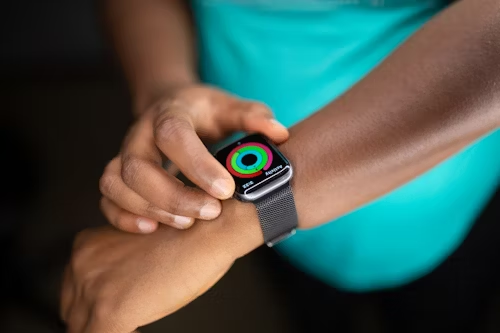
Your fitness tracker isn’t just a shiny band on your wrist – it’s a silent companion that watches you even when you forget to look. It doesn’t bother or criticize. Instead, it gently reminds you: You’ve been sitting for an hour. How about a walk around the block? In a world where our days are spent hunched over screens and lost in thought, this little piece of advice is more than helpful—it’s healing. It turns your invisible habits into visible patterns, so you can’t guess whether or not you’ve been moving enough—you know. And only that awareness can bring real change.
But the magic goes beyond counting steps. Your tracker really listens to your heart. By monitoring your resting heart rate over weeks and months, it shows you how your body reacts to better sleep, more activity or even a stressful week. The gradual reduction in your resting heart rate isn’t just a number – it’s your heart getting stronger, your body getting more flexible. And when you use it before bed, it monitors your sleep like a caring friend, mirroring your deep rest, your dreams and your restless tossing and turning. Because you can’t improve what you don’t understand—and now we know that sleep is at the root of everything: mood, immunity, focus, even your urges.
Then there is quiet encouragement. It’s about showing up consistently. And on tough days, when stress feels overwhelming, many trackers now offer a moment of peace: a breath prompt, a heartbeat-guided break, a reminder that you don’t have to push through every wave.
3. The Blood Pressure Monitor: Taking Heart Health into Your Own Hands
High blood pressure doesn’t come with warning signs—it causes invisible damage to your heart, brain, and arteries while you spend your life feeling perfectly fine. That is why it has been called “the silent killer”. But here’s the good news: You don’t have to wait for a doctor’s appointment or a health problem to get checked. A simple home blood pressure monitor puts the power back in your hands, turning fear into awareness and guesswork into clarity. It’s not about passion – it’s about attention. And sometimes that small act of being mindful is enough to change your health trajectory for good.
By using a home monitor, you can see your blood pressure as it really is – not in the sterile, sometimes unnerving environment of a clinic, but in your living room, after your morning coffee or just before bed. These texts are often more honest, more revealing. Over time, you start to notice patterns: Your numbers go up after a bad night’s sleep, after eating salty food, or during a stressful week at work. It’s not just data – it’s a conversation your body is having with you. And now, for the first time, you are listening.
If you take medication for high blood pressure, this tool becomes even more valuable. Instead of guessing whether the pills are working or waiting months for your next checkup, you and your doctor can work together to make informed, timely adjustments. It’s like a real-time feedback loop between your lifestyle, your treatments and your heart. You don’t just follow orders – you participate in your own care with dignity and intention.
4. The Portable Blender: Fueling Your Body Right, Anywhere
In the hustle and bustle of modern life – late mornings, back-to-back meetings, school pick-ups and endless to-do lists – it’s easy to skip healthy meals. You grab a granola bar that’s mostly sugar, skip lunch altogether, or eat something fast that makes you tired by 3 p.m. But what if sustenance wasn’t a chore or a luxury? That’s where the humble portable blender steps in – not as a fancy gadget, but as a silent companion in your daily rhythm. It makes whole fruits, green leafy vegetables and good fats something you can actually enjoy. No preparation. No clarification. Real food, ready in minutes.
Blending isn’t just about convenience – it’s about unleashing your food’s full potential. When you add spinach, carrots or flaxseed to a smoothie, you break down their tough cell walls, making it much easier for your body to absorb vitamins, antioxidants and minerals. This is not a magic pill. This is an easily accessible science. Suddenly, munching on that handful of kale isn’t a chore—it’s a creamy, satisfying part of your morning ritual. You just don’t eat healthy. You get the benefit of this.
And because the blender cup often doubles as your drinking cup, there’s no extra dish, no mess. Make your own smoothie at home, in the office or even in a hotel room – and keep drinking it while walking, driving or sitting in the school pick-up line. The obstacle is no longer your willpower; It’s just a question of whether you remember to have a banana in your bag. This kind of intuitive access flips the script: Healthy choices become the easiest choices, not the hardest. No more “I will eat better when things calm down.” You just screw on the lid and go.
5. The Standing Desk Converter: The Antidote to “Sitting Disease”
For most people, the workday way hours glued to a chair—typing, scrolling, sitting thru calls—while our our bodies quietly stiffen, our strength dips, and our posture slowly collapses. Science now tells us what our aching backs have acknowledged for years: sitting for too lengthy isn’t simply uncomfortable—it’s a sluggish drain on our metabolism, stream, and even our heart health. But you don’t need to overhaul your entire office or purchase a elaborate new desk to fight lower back. A standing table converter is a simple, powerful restoration: a lift for your pc, a platform on your keyboard, and a mild invitation to transport your body returned into alignment—without ever leaving your workflow.
The shift from sitting to status—even for 20 minutes at a time—works like a reset button in your spine. No extra slouching into that familiar droop. When you stand, your shoulders certainly roll lower back, your head lifts, and your center engages. Over time, this eases the tension to your decrease again and neck, not through pressure, but via simple, constant realignment. You’re no longer “working out.” You’re remembering the way to inhabit your frame once more, one upright hour at a time.
And the benefits cross a long way beyond posture. Standing lightly boosts your metabolism, keeps your blood transferring, and allows alter blood sugar stages after meals—small however meaningful wins that upload up over weeks and years. Many people are amazed to locate that status doesn’t drain their energy—it in reality sharpens it. That publish-lunch fog? It lifts. The mid-afternoon stoop? It softens. You’re not just warding off damage; you’re inviting energy into your day, with out even converting your time table.
6. The Blue Light Blocking Glasses: Protecting Your Sleep and Eyes
We live in a world where it never really gets dark. Long after sunset, our eyes are flooded with the cold, artificial glow of phones, laptops, and TVs—lights that mimic the midday sun and tell our brains, stay awake! It’s still daytime! Problem? Our bodies haven’t caught up to our screens. That evening roll may feel like relaxing, but biologically it sends your nervous system into overdrive, delaying sleep and reducing its quality. Over time, this silent disorder drains your energy, focus, mood, and even your immune system. But there is a surprisingly simple shield: blue light-blocking glasses.
These aren’t just trendy orange frames – they’re a gentle intervention into your biology. Their lenses filter out certain wavelengths of blue light that suppress melatonin, the hormone that puts you into restful, deep sleep. Put them on an hour before bed and you’re not just dimming the screens, you’re signaling your body that it’s safe to relax. You may find yourself drifting off faster, waking up less often, and waking up with that rare, rested feeling. And because sleep is the foundation of everything—from repairing your cells to processing your emotions—this small act ripples through your life.
7. The Modern Blood Glucose Monitor: Unlocking Your Metabolic Health
For years we’ve been told what to eat based on broad guidelines – “whole grains are good”, “sugar is bad” – as if everyone’s body reacts the same way. But we are not the same. What burns one person can deplete another. That’s where continuous glucose monitors (CGMs) and personal metabolic trackers come in: They don’t guess your biology—they reveal it. By showing your blood sugar in real time, these devices transform food from a source of confusion into a language your body finally speaks clearly. And that clarity? This is transformative.
But it’s not just about food. Your glucose levels respond to more than food—they reflect your stress, your sleep, even your afternoon walk. You may notice that less rest one night causes your blood sugar to rise the next day, even if you ate well. Or that 10 minutes of meditation helps you stabilize your levels after a stressful meeting. Suddenly you see how deeply connected your lifestyle and biology really are. You don’t just track numbers – you uncover the hidden threads between your habits and your vitality.
This type of biofeedback used to happen only in laboratories or doctors’ offices. Now it’s in your pocket – cool, personal, instant. And with that comes a profound change: You stop feeling like a traveler in your health.
8. The Smart Mug: The Ritual of Hydration and Mindfulness
In the hustle and bustle of modern life, even something as simple as staying hydrated can slip through the cracks. We pour a cup of tea, get distracted by an email, and when we remember, it’s cold – and we miss both heat and water. A smart mug is not just a high-tech novelty; It is a silent invitation to return to that moment. By keeping your drinks at the perfect drinking temperature for hours, it turns hydration from a chore into a gentle, ongoing ritual. You don’t have to compulsively drink water – you can drink your favorite herbal tea slowly, steadily throughout the day and nourish your body without even thinking about it.
But this little device does more than just warm your hands – it heats up your speed. In a world that rewards speed, stopping to get a proper taste of the drink becomes a small act of rebellion. The first mindful sip of the morning, uninfluenced by information. That quiet break in the middle of the afternoon when you put the screen aside and just breathe over the cup. This is not an indulgence. They are subtle moments of presence that calm your nervous system, reduce stress and reconnect you to yourself. The mug does not create mindfulness – but it creates the conditions in which mindfulness can flourish.
And it is also a deep kindness: to yourself and the planet. No more wasting energy and paper cups by reheating lukewarm coffee in the microwave three times. No more throwing away half-finished drinks just because they’ve gone cold. The Smart Mug helps you slow down, sip full and stay present – turning a useless habit into something intentional. It’s not about perfection. It’s all about presence Every time you pick up that perfectly warm cup of joe, you’re not just hydrating your cells. You respect your need for peace, slowness, simple pleasures.
9. The Warrior’s Arsenal
Getting on the road to better health isn’t about perfection—it’s about presence. It chooses to show up day after day, even when progress seems slow or invisible. And while this journey is deeply personal, you don’t have to walk it alone. Today’s wellness tools—smart scales, fitness trackers, glucose monitors, and more—aren’t here to make or demand decisions. They are friends. Calm allies that provide clarity when you’re confused, encouragement when you’re tired, and gentle reminders that your body is always talking. All you need are the right ears to hear.
And this is the real magic. When you use these tools with curiosity—not obsession—they help you understand your body’s wisdom. You start eating not because a plan says so, but because you feel better when you do. You don’t move to burn calories, but because your joints thank you. You rest not out of guilt, but because you have seen how deep sleep increases your flexibility. This is not control. It is collaboration – with your own biology, your own rhythms, your own humanity.
So prepare wisely, but never forget: you are the expert on your life. Technology is just a mirror, a map, a momentary pause. Your body already knows what it needs – you just yell at it. Celebrate small victories. Respect mistakes. and continue. because your health is not good.
1. Do I need all 8 devices to see a difference in my wellness journey?
Not at all! Each device serves a specific purpose—whether it’s improving sleep, reducing stress, or supporting physical activity. Start with the one that aligns most closely with your current health goals, and build from there.
2. Are these devices worth the investment?
Absolutely. While some have a higher upfront cost, they often replace recurring expenses (like takeout, sleep aids, or last-minute fitness classes) and deliver long-term value through better energy, focus, recovery, and resilience.
3. Can these tools really support mental health, or are they just for physical wellness?
Many of them—like weighted blankets, mindfulness apps, and fitness trackers with stress metrics—are specifically designed to support your nervous system and emotional well-being. True wellness is whole-person care, and these tools reflect that.