







Health 7 Essential Habits That Protect Your Well-Being Every Day

In the rush of meetings, school runs, and endless to-do lists, health often becomes the quietest voice in the room – the one we promise to hear “later”. But what if “later” means never? What if health isn’t something you do when you finally have time, but something you take care of in the time you already have? This goal is not about gaining weight or achieving a lab report. It’s about showing up in small, steady ways—drinking water before your coffee, going out for five minutes, choosing comfort over guilt. These are not big movements. They are quiet acts of loyalty to the body and mind that carry you forward each day.
True wellness is not built on drastic changes or punishing routines. It’s linked to habits that feel more like kindness than choreography: a deep breath before answering a stressful email, a walk that doesn’t count steps but clears your head, saying no to extra work so you can say yes to sleep. These are not “hacks” or trends – they are an invisible architecture of resilience. When you stop seeing health as a concept and start treating it as a practice, you stop fighting your body and start listening to it. And this is where real strength begins – not in intensity, but in consistency.
It’s not about becoming someone else. It’s about returning to yourself again and again. The following seven habits are not rules to follow. They are invitations: to move gently, to rest without excuse, to eat mindfully, to connect without distraction. They are silent rituals that, over time, transform existence into vitality. You don’t need much time. You just have to be a little more careful every day. And that? In this way, you create a life where health does not feel like another burden – but rather the foundation for everything you love.
Table of Contents
Habit 1: Nourish with Purpose, Don’t Just Eat
You don’t need a nutritionist to eat well – all you need is a moment of peace. pause. Look at your plate. You wouldn’t put mud in the tank of your favorite car and wonder why it’s blowing up – so why fill your body with sugary drinks and processed junk that makes you sluggish, foggy or irritable? Real nutrition is not about restrictions. It’s all about resonance. Choose foods that boost your energy, clear your mind, and make you feel grounded—not burdened, guilty, or tired. It is not abstinence. It is devotion.
Your plate doesn’t need to be flawless – it just needs to breathe with colour. That purple cabbage in your salad? This is not for the ‘gram. It quietly strengthens your immune system, one chew at a time. And when you add a spoonful of spicy kimchi or creamy yogurt, you’re not just adding spice to your food—you’re caring for trillions of tiny organisms in your gut that affect your mood, digestion, even sleep quality. This is not modern science. It’s plain old biology. And you don’t need expensive powders or imported superfoods. Just curiosity. A little variation. And the courage to see your health plate not as a checklist, but as a garden you learn to tend.
Water doesn’t come with a hashtag or a fancy label—instead, it’s the silent heartbeat beneath every cell in your body.
Habit 2: Move Your Body in Ways You Genuinely Enjoy
The real buzz is the quiet joy of dancing barefoot in the kitchen, the peace of a morning walk looking at the lights on the trees, or the laughter that comes from playing with the child or the dog. It’s not about burning calories. It’s about reconnecting with your body – not as something to fix, but as something to celebrate. When you move in a way that feels good, your body begins to thank you: Your joints feel looser, your energy increases, and your mind becomes clearer. It’s not fitness. It is freedom.
You don’t need a gym membership or a 60-minute workout to make a change. Health is built in small, hidden moments: take the stairs instead of the elevator, walk slowly while making a phone call, stretch your arms above your head after sitting too long, or roll on the floor with your dog. These aren’t “bonus” activities – these are the cool stitches that hold your life force together. Movement is not an event. This is a rhythm. And when you let it flow into your day instead of shoving it into a corner of your schedule, it stops feeling like something you have to do… and becomes something you have to do.
And here’s the quiet truth: rest isn’t the opposite of movement—it’s part of it. Your body is not strong when you are struggling with pain. It grows as you listen. When you say no to the third workout because you’re tired. When you choose a nap instead of a spin class. When you gently stretch instead of pushing into discomfort. Real health isn’t built on grind – it’s built on rhythm. And when movement becomes a gift you give yourself, not a punishment you earn, you stop quitting. yo
Habit 3: Prioritize the Health Foundation of All Health: Sleep
In a world that glorifies burnout, less gold is often worn like a medal—proof that you “work hard.” But here’s the sobering truth: sleep is not laziness. This is the most important act of self-respect you will ever do. When you’re awake, you do. While you sleep, your body heals. Cells regenerate. Memories become congealed. Stress hormones are reset. Every time you tell yourself, “I’ll go to bed when my work is done,” you’re not being productive—you’re stealing from your future. Sleep is not a reward for completing everything. It is the foundation that allows you to do everything well.
Your bedroom should feel like a sanctuary—not an extension of your office, your streaming service, or your anxiety. Put the phone in another room. Draw the curtains. Allow the temperature to drop low enough to invite comfort. When your bed is only for sleep and quiet closeness, your brain learns: This is where I let go. An hour before bed? Don’t browse. Not work. Light a candle. Have a hot cup. Read a page from a real book. Let the eyes soften. Let the thoughts flow. These are not indulgences – these are rituals that tell your nervous system: You are safe. It’s okay to surrender. And that dedication? This is how treatment begins.
Consistency isn’t about stiffness – it’s about rhythm. Going to bed and waking up at roughly the same time – even on weekends – doesn’t mean giving up spontaneity. Waking up doesn’t feel like climbing out of an abyss. You stop needing five cups of coffee to function. You stop lashing out at your loved ones because you’re running on exhaust fumes. Good sleep doesn’t make you lazy – it makes you whole. This is not a luxury. It’s cool, daily
Habit 4: Cultivate Your Inner Garden: Mental and Emotional Health
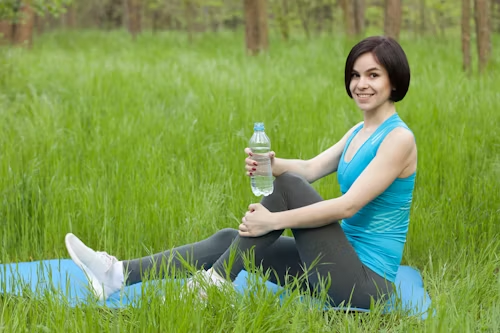
When your mind gets tired, it doesn’t scream—it just goes quiet. You stop enjoying small things. You scroll further than you intended. You throw yourself at the people you love. And you tell yourself it’s just “stress” or “being busy”. But mental health isn’t a distant concern—it’s the quiet hum beneath every decision you make, every conversation you have, every moment you try to relax. It’s not about being “positive” all the time. It’s about permitting yourself to feel what you feel, without shame. When you stop treating your inner world as an afterthought and start caring for it as a delicate, important thing, you stop running on idle – and start feeling like yourself again.
You don’t have to sit cross-legged for an hour to be alert. All you need is five minutes – sitting with your coffee before the day starts, noticing the ups and downs of your breath, noticing your thoughts passing by without chasing them like clouds. It’s medicine. In a world that demands constant production, these quiet breaks are revolutionary. It’s not rude to turn off notifications—it’s respectful.
Your time. Your peace. Of your ability to think clearly. Organize your feed like you organize a room: keep the lights in, the noise out. Stop following the voices that degrade you. Follow people who remind you that you are enough. Your attention is invaluable. Don’t let it be stolen by algorithms designed to keep you anxious.
And please – don’t suffer in silence because you feel like you have to “deal with it alone.” Talking doesn’t mean you’re broken. It means you are human. Sharing your worries with a friend over tea, talking late into the night, or even saying out loud, “I’m not feeling well today,” – this is not weakness. That courage Connection is oxygen to the soul. You don’t need therapy
Habit 5: Connect Deeply with Others
Studies show that it is as harmful to your health as smoking or inactivity – not because it is dramatic, but because it is profound. People thrive in warmth, in eyes that say I’m looking at you, in voices that say I’m here. Strong relationships aren’t a luxury for people with extra time – they’re a lifeline. It’s what keeps you going on tough days, a calm anchor when everything else seems shaky.
It’s not about the number of followers you have, group chats, or the number of birthday wishes you get. It’s about someone who knows your silence and doesn’t rush to fill it. The friend who sends “I’m thinking of you” messages without expecting a response. The family member who brings soup, not advice. It’s the relationships that keep you together – not the ones that last. Be conscious.
Pick a few people to hang out with. Put your phone down when you’re together. Look them in the eye. Let your listening be slow, patient, and real. That kind of presence is rare – and it’s the most generous thing you can give. You don’t just spend time with anyone. You say you mean something to me, just the way you are.
And if you’re waiting for someone else to get there first, you’re not alone. Most of us are. So be the person who sends the text. The one who says, “Do you want to go for a walk around the block?” Or “I miss our conversations”. A simple message does not have to be profound. It just has to be true. Because when you reach out, you’re not just strengthening a bond—you’re reminding someone (and yourself) that they’re not invisible. Connection does not require large movements. Just consistency.
Habit 6: Find Purpose and Meaning
You can eat smooth, sleep 8 hours, and hit the gym each day—however still wake up feeling like something’s lacking. That’s not a failure of discipline. It’s a hunger for that means. Purpose isn’t approximately converting the world in a unmarried sweep. It’s quieter than that. It’s the purpose you make espresso for your kid before school, the manner you show up to your friend even when you’re tired, the small act of portraying, writing, or tending your lawn as it makes your soul sense settled.
You don’t want a TED Talk or a nonprofit to count number. Your purpose lives within the regular selections that say, This matters to me—and I pick it. And while you stay aligned with that, even on normal days, your health doesn’t simply survive—it flourishes.
Start by asking: What lighting fixtures me up—now, not as it looks correct on paper, but as it feels proper? Maybe it’s kindness. Maybe it’s interesting. Maybe it’s creating something that didn’t exist earlier. Your values aren’t lofty ideals—they’re the compass hidden in your bones.
When you notice the way you spend your time, after which lightly nudge it toward what you truely care about, you begin to feel much less scattered and more entire. If you’re good with phrases, write letters to elderly neighbors. If you’re regular and calm, help organize the network pantry. You don’t have to be brilliant—you just have to be inclined to apply what you have already got, in the provision of what you love. That’s not productivity. That’s presence. And it’s the quietest form of restoration.
Gratitude doesn’t suggest ignoring ache—it’s a way of refusing to let or not it be the entire story. Each nighttime, pause for only a moment: What becomes small, however real, that I’m happy occurred nowadays? The way the daylight hit the kitchen table. The giggle you shared with a stranger in the grocery store. The truth is that someone remembered your name.
Habit 7: Embrace the Outdoors
The quiet hum of birds before the city wakes up. Nature does not ask you for anything. It does not require productivity, perfection, or performance. It simply asks you to show up – and in return, it gives you a kind of peace that you can’t buy, plan, or roll into existence. You don’t have to climb any mountains or travel far. Just going outside, being barefoot on the grass, or sitting under a tree for ten minutes can reset your nervous system in a way that no app ever can.
You don’t need to make “nature time” seem like another deal—you just need to move your life a little closer to the woods. Drink your coffee on the balcony instead of at your desk. Take the long way home, across the park. Bring your phone-free book to the bench by the river. Let your Zoom call happen as you walk around the block and let the breeze touch your cheeks.
These are not large movements – these are gentle reconnections. And they connect. When nature becomes part of your rhythm, not a weekend getaway, it stops feeling like a luxury and starts to feel like a homecoming. Your body knows what it needs. You just have to let it breathe.
There is something sacred about watching the sun rise or the leaves change color, without being in a hurry to capture it. Nature is in no hurry. It does not compete. It just is. And when you allow yourself to be still within it, you remember: your worries, your deadlines, your endless to-do lists – they are small before the seasons, the tides, and the quiet solidity of your roots. That perspective doesn’t erase your struggles. It keeps them, as the earth puts the seed first
Weaving It All Together
That’s it. No big announcement. No guilt if you miss a day. Just showing off, gently, for myself. These small choices are not unimportant – they are sacred. They are the whispers that say: I deserve this care. And over time, these whispers become a chorus.
The progress is not loud. It does not come with trophies or before-and-after photos. This comes in such a way that you no longer feel tired at 3 pm. It’s when you notice that you smile more during a walk, or fall into a deeper sleep after a walk in the park. You don’t have to master all seven habits—just let one fall into a rhythm.
Then, when it feels like second nature, let someone else in, like sunlight through a window. The goal is not perfection. Its presence. Every time you choose rest over exhaustion, water over soda, peace over rolling, you’re not just improving your health—you’re rebuilding your relationship with life. And this is where the real change begins.
Your health is not something you earn through discipline. These seven habits aren’t rules—they’re gifts you give yourself: more energy to play with your kids, more calm to listen to your partner, more clarity to show up as the person you know you are beneath the noise.
Q: What are the 7 essential habits for daily well-being?
A: The 7 essential habits include: staying hydrated, prioritizing sleep, moving your body daily, practicing mindfulness, eating whole foods, connecting with loved ones, and protecting your mental space from overwhelm. These small, consistent actions build resilience and long-term health.
Q: Do I need to do all 7 every day?
A: Not perfectly—progress over perfection. Focus on 2–3 habits daily that feel manageable. Consistency, not intensity, drives lasting change.
Q: How long until I notice a difference?
A: Most people feel calmer and more energized within 7–14 days. Deeper benefits—like improved digestion, better sleep, or reduced anxiety—typically emerge in 3–6 weeks.