






Health Exploration: 8 Different Types of Yoga and Their Benefits
Often left in the background, silently suffering from the noise of daily life. It’s no wonder so many of us feel broken, even when we do all the “right” things. That’s why, for many people, yoga doesn’t start as a fitness trend – it starts as a quiet craving. This is the person who rolls out the mat, not because he wants to touch his toes, but because he needs to remember what it feels like to be present.
Yoga, in its true form, is not about deformity or perfection; It’s about connection. It is a slow, conscious union of breath and movement, body and stillness, effort and dedication. It’s the practice of coming home to yourself—not in a grand, dramatic way, but in the silence between inhalation and exhalation, the way your shoulders drop after a long day, the moment you realize you’ve been holding your breath scrolling through emails.
It’s not just exercise; It is a return to health perfection. And within this ancient tradition, there is not just one path – there are eight different paths to follow. Some people are empowered by building strength and endurance as a daily ritual of discipline. Others are gentle and shelter tired nerves and heavy hearts. Some invite deep introspection, while others plant you firmly in the here and now. The beauty is this: You don’t have to find “the one true yoga.” You just have to find someone who meets you where you are – whether you’re recovering from burnout, looking for clarity or just.
Table of Contents
1. Hatha Yoga: The Foundation of Physical Health
When most people in the West imagine yoga, they probably imagine something similar to Hatha – calm, intentional, and grounded. Think of it as the calm foundation beneath fast, flashy trends—the steady heartbeat beneath the hustle and bustle of movement. If you’ve ever stepped on a mat that made you feel unsure, stiff, or just plain scared, the handles welcome you just as you are. There is no rush in this, no pressure to keep up. Instead, you move slowly from one pose to the next—Mountain Pose, Downward Dog, Warrior I—and hold each one long enough for you to settle into it, adjust, and really feel what’s happening in your body.
A good Hatha class feels less like a workout and more like a conversation between you and yourself. The instructor will guide you to proper alignment, not to achieve an Instagram-worthy look, but to help you move safely with awareness and care. This attention to detail isn’t just about avoiding injury – it’s about learning how your body works, how it holds tension, where it resists, and where it opens up. This kind of body wisdom is invaluable, especially if you are recovering, aging, or trying to stay balanced in a chaotic life. And because this movement is so meditative, your nervous system begins to relax almost without you noticing.
The breath deepens, the shoulders drop, and for once, the mind cannot move on to the next task. You are here right health now. This moment. On your mat. This is where real healing begins – no.
2. Vinyasa Yoga: The Dance of Dynamic Health
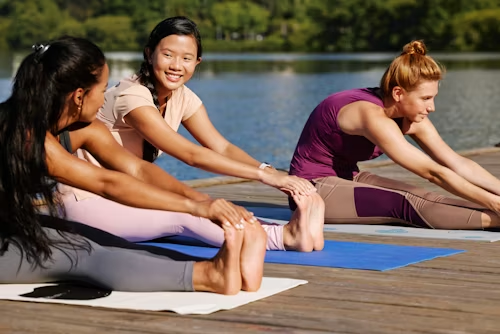
If Hatha is like flipping through a beautifully curated photo album – each image a quiet, conscious moment – then Vinyasa is the film that follows: fluid, alive, and full of rhythm. This is dynamic yoga, where each inhale pulls you upward, and each exhale gently moves you into surrender. You don’t just hold poses here – you slide between them, like water flowing over rocks, each transition guided by the calming pulse of your breath.
This is the heart of vinyasa: “lying in a particular way,” not only the body, but also the mind. It’s not about perfection—it’s about presence, about staying with the flow, even when your arms shake in Chaturanga or your legs wobble out of Warrior III. There is something deeply human in that struggle, looking tired, disoriented, or uncertain, and still choosing to move on with the breath. No two classes are ever the same; One day you might be doing Surya Namaskar in dim light, the next you might be spinning and balancing to a playlist that will make you feel like you’re dancing up a storm.
The heat in the room isn’t just to stretch out the muscles – it’s to reflect what’s going on inside: release, sweat, exfoliation. And yes, it is difficult. Your arms burn, your lungs demand air, your brain screams to stop – but then you somehow find a rhythm. And in that rhythm, something changes.
Your heart beats faster, your core settles, your legs learn to do more than just physical positions – they carry you through stress, through heaviness, through days when everything feels heavy. But here’s the magic: While your body works, your mind settles down. The constant need to coordinate breathing with health movement takes you out of your mind and into your body. You can’t worry about your to-do list when you try
3. Ashtanga Yoga: The Disciplined Path to Health
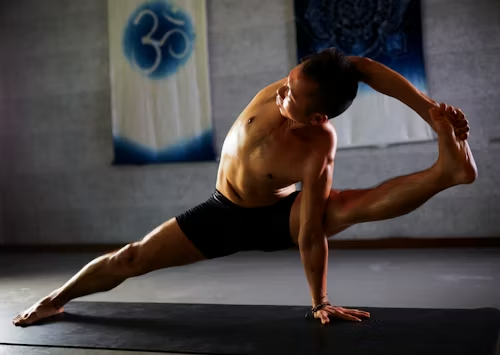
Ashtanga offers something rare: a fixed point in the chaos. There is no music, no flashy signs, no instructor pushing you to work harder. Just silence, breathing, and the same sequence every day. Surya Namaskar A, then B, the standing poses, the series of sitting poses – all repeated with devotion, like a ritual that doesn’t care how you feel, just that you show up. In a Mysore style, you proceed at your own pace.
You can be five minutes into your workout while someone across the room is finishing their third class – and that’s not a failure, it’s just where you are. Teachers walk quietly among the students, watching, waiting, placing a hand on the hip to align the pelvis,s or whispering to lengthen the spine. Not because you are doing it wrong, but because they see your effort, your intention, your quiet courage. The first time you try the Primary Series – called Yoga Therapy, which means “yoga as therapy” – you’ll probably be drenched in sweat, your limbs will be shaking, and you’ll wonder if you’ve made a big mistake. Your body protests, your ego protests, your mind begs for it to end.
But somehow you come back to healhttps://healthlinee.site/health-automation-10-meals-you-can-prep-30-min/th . Not because it becomes easy, but because something changes inside. Repetition, once boring, begins to feel grounded. Stop focusing on whether or not you can do the pose and start paying attention to how it feels to breathe through the resistance. You learn that discipline doesn’t have to mean being harsh.
4. Iyengar Yoga: The Alignment of Precision Health
Iyengar Yoga doesn’t ask you to bend into one shape – it asks you to listen, adjust, respect the body you have, not the body you think you should have. B.K.S. Developed by Iyengar, a man who himself once struggled with illness and pain, the style is less like a workout and more like a calm, conscious interaction between bones, muscles, and breath. Here you won’t find strong electricity or warm rooms. Instead, you’ll find blocks under the arms, straps around the legs, bolsters to support the spine – tools not to make things easier, but to make them right. This is not a sign of weakness;
They are signs of intelligence. Iyengar taught that yoga isn’t about achieving a posture—it’s about understanding how your body moves through it. So you stay in a posture for a long time – not to suffer, but to feel: the subtle lifting of your arches, the quiet release in your lower back, the way your shoulder blades finally settle after years of hunched over a desk. There is no rush. no comparison. There is no “good deed” if you touch your toes, and no shame if you don’t.
Just the patient, unwavering attention of a teacher who sees your mistakes not as mistakes but as clues. And that’s what makes it so deeply therapeutic. Whether you’re recovering from a herniated disc, treating arthritis in your knees, or simply tired of stiffness and pain, Iyengar meets you where you are—with precision, compassion, and an almost scientific curiosity about how your body works.
It doesn’t just stretch your muscles—it adjusts your posture, corrects imbalances you didn’t even know you had, and teaches you to stand, sit, and walk in a pain-free world. Over time, you stop needing props – not because you’ve gotten “better”, but because you’ve learned to live with the props.
5. Kundalini Yoga: The Awakening of Energetic Health
Kundalini yoga doesn’t feel like yoga in the way you’ve probably seen it done on Instagram – no perfect handstands or silent sun salutations. You want to say the words in Sanskrit, not because you understand them, but because the vibration in your throat, chest, and legs begins to feel like something awakening. You hold a simple pose for minutes at a time—not to stretch, but to endure—while your mind screams: Why am I doing this?
And then, suddenly, his screaming stops. It just… works out. This is magic. Kundalini is not trying to make you flexible; It is trying to make you survive. It’s designed to shake up the quiet, buried stuff—the anxiety you’ve ignored, the grief you’ve had after a loss, the voice inside you that says, “You’re not enough.” Through breathing that feels like a hurricane, through mantras that sound like prayers you’ve always wanted to say, through meditation that lasts exactly 11 minutes (because apparently it takes that long for your nervous system to readjust) – you start to feel lighter.
Not because you solved your problems, but because you stopped carrying them that way. People who practice Kundalini often say they feel “brighter”, as if their internal batteries have been recharged. They wake up with thoughts they didn’t have before. They are crying.
6. Yin Yoga: The Deep Release for Connective Health
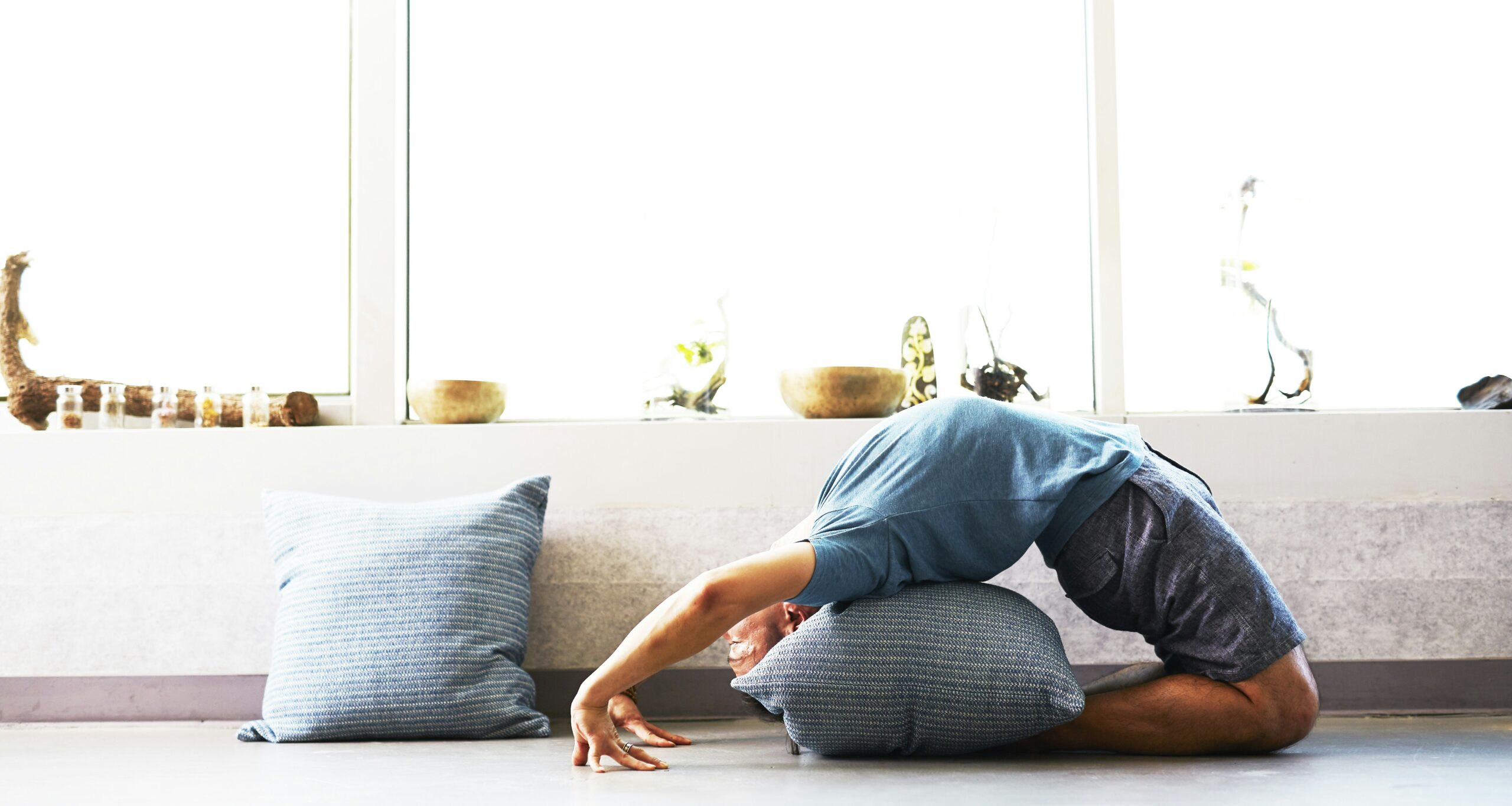
In a world that rewards hustle, speed, and constant work, Yin Yoga is a quiet rebellion – a gentle, radical act of stopping. It doesn’t ask you to push harder, burn more calories, or achieve the deepest stretch. Instead, it asks you to do the opposite: lie down, settle down, and let go. No music, no flow, no countdown – just you, a few pillows, and the quiet hum of your own breath as you hold a pose for three, five, even ten minutes.
You can fold into a butterfly shape, rest your forehead on a block, or lie completely still with your feet up against a wall. There is no effort here – no muscle strain, no trembling limbs. Just gravity, slowly pulling, letting go, opening up tight knots in your hips, spine, shoulders—places you’ve been holding tension for years, and you don’t even realize it. Yin is not about stretching the muscles; It’s about whispering down to your deepest layers: the dense web of ligaments, tendons, fascia that hold your body together but rarely get any love.
These tissues do not respond to fast movements – they require time. They want peace. And when you give it to them, something remarkable happens: Your joints start breathing again. Your spine remembers how to move without pain. Your hips, locked tight since the breakup, that job loss, that sleepless night, have finally softened.
But real magic isn’t just physical—it’s emotional. In those long, quiet blocks, your mind starts to rebel. Why am I still here? Does this work at all? My knee is tingling… should I move? And then, slowly, you stop fighting it. You stop trying to fix it. You just… sit with it. Restlessness. Sadness. A sudden surge of emotion appears out of nowhere. You can cry. You can laugh. You may feel that you have not known this fragrance
7. Restorative Yoga: The Art of Passive Health
Restorative yoga is not yoga as you have been taught to think of it – no effort, no strain, no “forward”. It is its opposite: a soft, holy surrender. Imagine you’re lying on a mat, wrapped in a cocoon-like blanket, feet propped up on a plank, spine resting on a pillow, forehead resting on a folded towel—completely, completely held.
No muscles work. No brain racing. You are not trying to promote, empower, or “do” anything. You are simply, and in that stillness, something deep inside your body remembers how to heal. This is the magic of restorative yoga: It doesn’t ask you to fix yourself—it permits you to stop trying. In a world that never stops demanding more – more productivity, more energy, more hustle – Restorative says “Enough”. You don’t have to earn this peace.
You don’t have to sweat for this. You just need to lie down. Props aren’t there to make it easy – they’re there to make it possible. To release every last bit of stress so your nervous system can finally switch off fight-or-flight mode and transition into rest-and-repair. And when that happens, your body remembers what it’s so tired of: healing. Your immunity wakes up. Your digestive process calms down. Your blood pressure drops. Your sleep, which has been disrupted for months—or even years—starts to return, not because you’ve taken a pill, but because your body finally feels safe enough to close your eyes.
8. Bikram (Hot) Yoga: The Detoxifying Heat of Health
Bikram yoga isn’t just hot—it’s relentless. You walk into that room and the heat hits you like a wall, thick and wet, clinging to your skin before you even take your jacket off. It’s 105 degrees, the air is heavy with humidity, as if the room is breathing directly into your lungs. And then you realize: You’re not here to stretch or sweat or actually do yoga—you’re here to survive. The same 26 seats. The same two breathing exercises.
Every class, everywhere. No variety, no shortcuts, no escape. Just you, your trembling limbs, and the inflexible heat pressing down like a silent judge. You’re sweating—not flashes of light, not polite streams—but big, heavy rivers running down your back, pooling under the mat and sliding off your hands as you try to hold the pose. Your shirt will be like new skin, wet and heavy. Your vision becomes blurry at the edges. Your mind is screaming, Why? Why am I doing this? I can’t. My work is done. And yet – you persist.
If you drift even for a second, you wobble. You fall. You feel a burning sensation. And this is where the real change happens—not in how deep you go into the backbend, but in how calm you remain when every fiber of your being wants to collapse. You learn to breathe through panic.
9. Conclusion: Your Personal Path to Health
This journey through eight types of yoga isn’t about picking a winner—it’s about finding the one that meets you where you are, right now, in this breath, in this body, in this season of your life. Yoga doesn’t ask you to be perfect. It doesn’t matter that you can’t touch your toes or that your hamstrings scream when you bend forward.
As a twenty-year-old, you may have been raised on the fire of Ashtanga—the relentless rhythm, the sweat, the feeling of conquering something difficult. Or maybe the vinyasa was your anthem, flowing with the music, letting your body dance through the flow as if you were finally free. And now? Maybe your knees hurt after spending a long day at a desk. Maybe your mind is tired of performing. Maybe you’re not trying to exert yourself too much – you’re just trying to relax more deeply. You may find yourself drawn to the soothing cradle of Iyengar’s props, as a support holds your spine like a gentle hand.
Q: Which type of yoga is best for beginners?
A: Hatha or Restorative yoga are the gentlest starts — slow, supportive, and focused on learning breath and alignment without pressure.
Q: Can yoga help with anxiety?
A: Yes — Yin, Restorative, and Kundalini yoga are especially effective at calming the nervous system and reducing stress hormones.
Q: Is hot yoga safe for everyone?
A: Not always. Bikram and other heated styles can be risky for those with heart conditions, pregnancy, or heat sensitivity. Always consult your doctor first.